

How AI Will Transform Business Management Consulting — And Redefine Client Value
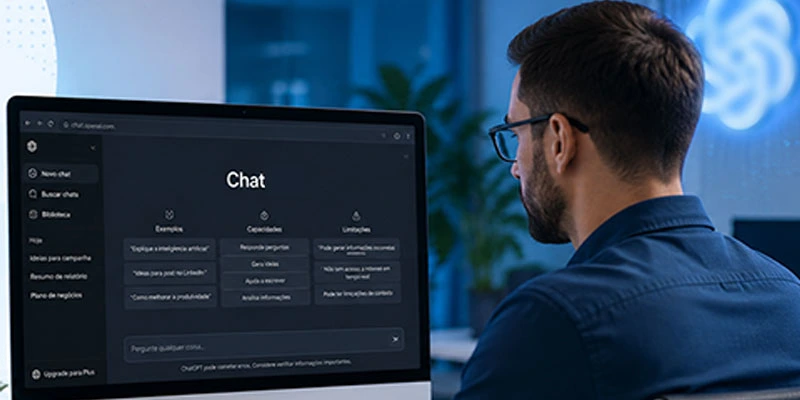
Estimated reading time: 8–10 minutesThe business management consulting industry is entering one of the most significant transformations in its history. For decades, consulting firms created value primarily through human expertise: structured problem-solving, market analysis, operational redesign, financial modeling, and strategic recommendations delivered by teams of highly trained professionals.
Artificial Intelligence is now changing the economics, speed, and scale of that model.
AI will not replace consulting. Instead, it will fundamentally redefine how consulting services are delivered, how value is created, and how clients measure outcomes. The firms that successfully integrate AI into their operating model will move from labor-intensive advisory organizations into high-impact, insight-driven transformation partners capable of delivering faster, smarter, and more measurable business results.
From Knowledge-Based Consulting to Intelligence-Augmented Consulting
Traditional consulting has historically relied on three core assets:
- Human expertise
- Proprietary methodologies
- Access to industry benchmarks and data
AI dramatically amplifies all three.
Large Language Models (LLMs), predictive analytics, autonomous research agents, workflow automation, and generative AI systems can now process vast amounts of information in minutes — work that previously required weeks of analyst effort.
This evolution creates a new consulting paradigm:
Old Model
- Time-intensive analysis
- Sequential workflows
- Periodic reporting
- Human-only insight generation
AI-Enabled Model
- Real-time intelligence generation
- Leaner, higher-value teams
- Parallelized workflows
- Continuous strategic monitoring
- Human + AI collaborative decision-making
The result is not simply improved efficiency. It is a structural breakthrough in how consulting firms create value for their clients.
The Five Major AI Breakthroughs in Consulting
Hyper-Accelerated Strategic Analysis
One of AI’s biggest impacts will be the compression of analysis cycles.
Tasks such as:
- Market research
- Competitive benchmarking
- Financial trend analysis
- Customer segmentation
- Supply chain mapping
- Regulatory scanning
can increasingly be automated or AI-assisted.
What once required analysts over several weeks can now be completed in hours with significantly broader data coverage.
Consultants will spend less time gathering information and more time interpreting strategic implications.
This shift enables firms to:
- Deliver projects faster
- Reduce costs
- Increase analytical depth
- Respond to market changes in real time
For clients, this means decision-making cycles shrink dramatically.
Outcome-Based Consulting Models
AI will accelerate the transition from “billing for effort” to “billing for outcomes.”
Historically, consulting revenue was closely tied to:
- Number of consultants
- Billable hours
- Project duration
AI disrupts this model because many repetitive analytical tasks become automated.
As a result, clients will increasingly expect:
- Faster delivery
- More measurable ROI
- Continuous value creation
- Performance-linked pricing
This creates an opportunity for consulting firms to evolve toward:
- Subscription-based advisory
- AI-enabled strategic monitoring
- Continuous operational optimization
- Shared-value or gain-sharing contracts
In this environment, consulting firms become embedded transformation partners rather than episodic advisors.
The value proposition shifts from:
“We provide recommendations”
to:
“We continuously improve your business performance.”
Continuous Real-Time Advisory
Traditional consulting projects are often static snapshots of dynamic businesses.
AI changes this completely.
With connected enterprise data, AI systems can continuously monitor:
- Sales performance
- Operational KPIs
- Inventory trends
- Financial indicators
- Customer behavior
- Competitive activity
This allows consultants to provide ongoing, real-time recommendations instead of quarterly or annual assessments.
Consulting becomes less reactive and significantly more predictive.
This evolution will substantially increase the long-term strategic value consultants provide to clients.
Democratization of High-Level Expertise
AI will also lower the barriers to accessing premium consulting capabilities.
Historically, sophisticated strategic consulting was largely accessible to large enterprises with significant budgets.
AI-powered consulting platforms will enable:
- Mid-sized businesses
- Emerging companies
- Family-owned enterprises
- Regional organizations
to access advanced strategic insights at lower cost.
Capabilities once reserved for Fortune 500 companies — such as predictive forecasting, scenario modeling, pricing optimization, or advanced market intelligence — will become increasingly scalable and affordable.
This expands the total consulting market dramatically.
Firms that successfully productize AI-enabled advisory services will gain access to entirely new client segments.
Enhanced Decision Quality Through Human + AI Collaboration
Despite AI’s growing capabilities, consulting will remain fundamentally human-centered.
Executives do not hire consultants solely for data analysis. They hire them for:
- Judgment
- Context
- Leadership alignment
- Change management
- Organizational influence
- Strategic interpretation
AI enhances these capabilities but does not replace them.
The future consulting model will likely combine:
- AI-driven analytical engines
- Human strategic interpretation
- Industry expertise
- Executive communication
- Organizational transformation leadership
The highest-performing consultants will not necessarily be those who produce the most analysis, but those who best orchestrate AI capabilities into actionable business decisions.
In many ways, consulting professionals will evolve from “information producers” into “strategic intelligence architects.”
The New Consulting Technology Stack
Leading consulting firms are already investing heavily in AI-enabled delivery ecosystems that integrate:
- Generative AI copilots
- Autonomous research agents
- Predictive analytics engines
- Financial modeling automation
- Workflow orchestration tools
- Digital twins and simulation models
- Knowledge management AI systems
- Client-specific intelligence platforms
These technologies create a consulting operating model that is:
- Faster
- More scalable
- More data-driven
- More predictive
- More personalized
Over time, proprietary AI ecosystems may become as important as human talent in determining competitive advantage among consulting firms.
Challenges Consulting Firms Must Address
The transformation will also introduce major challenges.
Trust and Accuracy
AI-generated outputs require validation. Clients will expect consulting firms to maintain rigorous quality control and governance.
Data Security
Consulting firms handle highly sensitive corporate information. AI integration must comply with strict data privacy and cybersecurity standards.
Talent Transformation
Consultants will need new capabilities:
- AI fluency
- Data interpretation
- Prompt engineering
- Digital workflow design
- Human-AI collaboration management
Business Model Disruption
Traditional pyramid staffing models may become less efficient as AI automates junior analytical work.
Firms will need to rethink:
- Pricing
- Team structures
- Talent development
- Delivery economics
The Future of Competitive Advantage in Consulting
The consulting firms that thrive in the AI era will likely share several characteristics:
- AI-Native Delivery Models: They will integrate AI deeply into daily workflows rather than treating it as a standalone tool.
- Industry-Specific Intelligence: Generic AI capabilities will commoditize quickly. Proprietary industry expertise and specialized data will become critical differentiators.
- Continuous Client Engagement: Successful firms will move beyond project-based work toward ongoing transformation partnerships.
- Human-Centered Transformation Expertise: Technology alone does not transform organizations. Firms that combine AI with strong leadership, culture, and execution capabilities will create the most value.
Conclusion
AI represents far more than an efficiency tool for business management consulting. It is a fundamental restructuring force for the entire industry.
The next generation of consulting firms will operate with:
- Real-time intelligence
- AI-enhanced decision systems
- Outcome-based engagement models
- Continuous strategic monitoring
- Highly scalable advisory platforms
As AI automates large portions of analytical work, the true differentiator will increasingly become the ability to combine technology, strategic judgment, and execution leadership into measurable business outcomes.
The consulting firms that adapt fastest will not only reduce delivery costs or improve productivity — they will redefine what clients expect from consulting itself.
In the AI era, the future of consulting will not be built around selling hours of analysis.
It will be built around delivering continuous intelligence, accelerated transformation, and guaranteed business impact.
Carlos Matias is the Founder and CEO of CMC Consulting. The purpose of CMC Consulting is to enable and implement the expansion of foreign companies in Brazil, and of Brazilian companies in international markets.
Looking for something?
Sign up and receive exclusive content.
Categories
Entry and Business Expansion in Brazil
Business Management
Process Management
Interim Management
Follow us on social media
Recent articles
Move Beyond Isolated AI Pilots: Start Transforming Business Domains
How the CMC Domain Transformation Flywheel Turns Human Judgment and AI Capability into Cumulative Business Value The unit of AI transformation should not be the isolated use case. It should be the business domain: an end-to-end system integrating...
The Economics of Agentic AI Where Automation Ends and Autonomy Begins
Where Automation Ends and Autonomy Begins How leaders can determine the economically justified level of autonomy for each business workflow EXECUTIVE SUMMARY The central executive question is no longer whether artificial intelligence can automate work. It...
© 2024 CMC Consulting. All rights reserved.
Matérias Relacionadas
Move Beyond Isolated AI Pilots: Start Transforming Business Domains
How the CMC Domain Transformation Flywheel Turns Human Judgment and AI Capability into Cumulative Business Value The unit of AI transformation should not be the isolated use case. It should be the business domain: an end-to-end system integrating...
The Economics of Agentic AI Where Automation Ends and Autonomy Begins
Where Automation Ends and Autonomy Begins How leaders can determine the economically justified level of autonomy for each business workflow EXECUTIVE SUMMARY The central executive question is no longer whether artificial intelligence can automate work. It...

Before You Decide What to Transform, Ask a Different Question
Organizations rarely suffer from a shortage of transformation initiatives. But each can lead leadership teams to begin the conversation one question too late. WHAT MUST THE ORGANIZATION BECOME CAPABLE OF DOING DIFFERENTLY AFTERWARD? Estimated reading time:...
