

Brazil Tax Reform How it will impact businesses from Commerce, Services and Industry Sectors – Insights and Strategies

Brazil Tax Reform
How it will impact businesses from Commerce, Services and
- Industry Sectors
- Implementation Roadmap & Transition Timeline
- Special Tax Regime Transition (Simples)
- Insights and Strategies
By: Carlos Matias – CEO CMC Consulting
Estimated reading time: 12–15 minutes
Table of Contents
Executive Summary …………………………………………………………
1 Tax Reform Impact by Sector
1.1 Commerce (Retail and Distribution) ……………………………..
1.2 Services Sector……………………………………………………..
1.3 Industrial Sector ……………………………………………………
1.4 Cross-Sector Impacts ……………………………………………..
1.5 Conclusions …………………………………………………………
1.6 Strategic Actions Business Leaders Should Start Now ………..
1.7 Bottom-line ………………………………………………………….
2 Implementation Roadmap and Transition
2.1 Transition Timeline …………………………………………………………
2.2 Sector-by-Sector impact during Transition
2.2.1 Commerce …………………………………………………..
2.2.2 Services ……………………………………………………..
2.2.3 Industry.. ……………………………………………………..
2.2.4 Logistics & Transportation …………………………………
2.2.5 Financial, Agribusiness, Construction ……………………
2.3 – Split Payment Challenge ………………………………………..
2.4- Conclusions ……………………………………………………….
3 Tax Reform impact on Simples Nacional
3.1 Executive Summary ………………………………………………
3.2 Impact by Sector
3.2.1 Commerce …………………………………………………..
3.2.2 Services ……………………………………………………..
3.2.3 Industry.. …………………………………………………….
3.4 What Business Executives should do …………………………..
3.5 Conclusion. ………………………………………………………..
Brazil Tax Reform
How it will impact businesses from Commerce, Services and Industry Sectors – Insights and Strategies
Executive Summary
Brazil’s tax reform is the most significant change to the country’s business taxation system in more than 50 years.
It replaces a complex web of indirect taxes (PIS, COFINS, IPI, ICMS, and ISS) with a Dual VAT system consisting of:
- CBS (Contribution¹ on Goods and Services) – Federal VAT
- IBS (Tax² on Goods and Services) – State and Municipal VAT
- Selective Tax (IS) – Applied to products considered harmful to health or the environment
Notes :
¹ Contribution: The money has a specific and exclusive purpose to benefit a particular group or to finance areas such as social security
² Tax: The money collected goes into a “general fund” and is used to finance health, education, and security. The payer does not receive a specific service in exchange for what was paid.
The transition began in 2026 and will continue through 2033.
The reform aims to:
- Simplify Compliance,
- Eliminate Tax Cascading,
- Reduce Litigation, and
- Improve Economic Efficiency.
Impacts Summary
Sector | Expected Impact | Key Winners | Key Risks |
Commerce / Retail | Mixed to Positive | Large retailers, e-commerce, multi-state operations | Margin pressure for low-credit businesses |
Services | Generally Negative | Service firms with significant taxable inputs | Higher effective tax burden, pricing pressure |
Industry | Strongly Positive | Manufacturers, exporters, capital-intensive operations | ERP and supply-chain transition complexity |
1. Commerce (Retail & Distribution)
Strategic Impact
Retailers benefit from the VAT principle of full credit recovery across the value chain. The reform eliminates much of the complexity associated with ICMS rules, interstate taxation, tax substitution regimes, and fiscal incentives.
Positive Effects
Simpler Operations
- One national tax logic replacing thousands of state and municipal rules
- Lower tax Compliance costs
- Reduced Litigation
E-commerce Benefits
- Destination-based taxation simplifies interstate sales
- Reduced complexity in omnichannel operations
- Better inventory allocation flexibility
Improved Cash Flow Visibility
- More transparent tax calculation
- Easier margin management
Risks
End Consumer Tax Increase
- Certain Retail categories may experience higher consumer prices if suppliers pass through higher tax costs.
- Working Capital Pressure: The new Split-Payment¹ and credit mechanisms may temporarily affect cash flow during transition.
Note : ¹ The Split payment mechanism is an automatic tax collection system in Brazil’s consumption tax reform. When a transaction occurs, the payment gateway, bank, or financial institution automatically separates the portion meant for the new taxes—the federal CBS and state/municipal IBS—and routes it directly to the government, sending only the net amount to the seller
Financial Impact Example
Current retail business:
- Revenue: R$100M
- Gross Margin: 35%
Potential outcomes:
Impact Driver | Effect |
Compliance cost reduction | +0.5% to +1.5% EBITDA |
Better credit recovery | +1% to +3% EBITDA |
Transition costs | -0.5% to -1% EBITDA |
Net effect: generally positive for medium and large retailers.
2. Services Sector
Strategic Impact
Services are widely expected to be the most challenged sector under the reform.
The reason is structural: Service companies typically have labor-heavy cost structures, and payroll does not generate VAT credits, low material consumption and few taxable inputs., resulting in a limited credit generation.
Meanwhile, the new VAT rate is significantly higher than the current ISS & PIS/COFINS rates many service companies pay.
So many service business may face a significantly higher effective tax burden
Most Exposed Segments
- IT services
- Consulting
- Engineering
- Legal services
- Accounting
- Marketing agencies
- Security services
- Facility management
- Healthcare services (except special regimes)
Why Services Lose
Example:
Current model:
- ISS: 2%–5%
- PIS/COFINS (Presumed Profit): 3.65%
Future model:
- Effective VAT (CBS + IBS) potentially approaching 26%–29% before credits
- Limited credit generation because labor costs dominate expenses
Financial Impact Example
Professional services company:
Metric | Current | Future |
Revenue | R$100M | R$100M |
Labor Cost | 70% | 70% |
Tax Burden | ~8% | Potentially 15–25% effective |
EBITDA | 20% | Could fall to 10–15% |
Strategic Responses
Leading service companies are already evaluating:
- Pricing model redesign
- Contract renegotiation
- Service bundling
- Automation and AI adoption
- Shared service models
- Legal entity restructuring
The pressure on margins could be substantial, particularly in B2C services.
Executive Conclusion
For service companies, the tax reform is not primarily a tax project—
It is a business model transformation project.
3. Industrial Sector
Strategic Impact
Industry is generally expected to be the biggest winner.
The VAT model removes cascading taxes and allows broad recovery of credits throughout the production chain.
Positive Effects
Full Non-Cumulative Credit System
Credits can be recovered on:
- Raw materials
- Components
- Logistics
- Utilities
- Capital goods
- Services used in production
This significantly reduces embedded tax costs. The new VAT structure removes much of this cumulative effect.
End of the ICMS Tax War
The reform reduces:
- Tax-driven supply chain decisions
- Location decisions based on fiscal incentives
- Complex ICMS planning
This allows companies to optimize operations based on business logic rather than tax considerations.
Benefits include:
- More rational plant location decisions
- Less dependency on tax incentives
- Better supply chain optimization
Export Competitiveness
Exports remain tax-free while allowing recovery of accumulated credits, improving international competitiveness.
Financial Impact Example
Manufacturer:
Metric | Current | Future |
Revenue | R$500M | R$500M |
Input Purchases | R$300M | R$300M |
Recoverable Credits | Limited | Broad |
Effective Tax Cost | High | Lower |
EBITDA | 12% | 14–18% |
Strategic Opportunities
- Supply Chain Redesign
- Footprint Optimization
- Nearshoring
- Export Expansion
- Working Capital Improvements
4. Cross-Sector Implications
ERP and Technology
All companies must update:
- SAP
- Oracle
- Totvs
- Other ERP’s
- Tax engines
- E-invoicing systems
- Master data governance
2026 is essentially the testing year for these adaptations.
Pricing
Most organizations will need:
- Customer profitability analysis
- SKU-level Tax simulation
- Contract repricing
M&A Activity
The reform may accelerate:
- Consolidation in Services
- Manufacturing Investment
- Supply Chain Restructuring
- Regional Distribution Center Redesign
Financial Performance
EBITDA
Sector | Likely Effect |
Services | Margin pressure |
Retail | Slight improvement or neutral |
Industry | Improvement expected |
Working Capital
- Many companies will need to adapt to: New tax credit mechanisms
- Faster reconciliation requirements
- Split-payment systems
This may temporarily increase working capital requirements during the transition
5. Conclusions
Commerce
Moderate winner
- Simplification
- Better credit utilization
- Improved interstate operations
Services
Potential loser
- Higher effective tax burden
- Margin compression
- Need for pricing and operating model redesign
Industry
Clear winner
- Broad tax credits
- Reduced cascading taxes
- Enhanced export competitiveness
- Better Supply Chain economics
6. Strategic Actions Business Leaders Should Start Now
Tax Impact Simulation
Model the company’s:
- Current tax burden
- Future CBS/IBS burden
- Margin impact by product and customer
Pricing Review
Recalculate:
- Product profitability
- Service profitability
- Customer-level margins
ERP and Systems Readiness
Review:
- SAP
- Oracle
- TOTVS
- Other ERP’s
- Tax engines
- E-invoicing systems
The reform requires major configuration changes.
Contract Renegotiation
Long-term contracts should include:
- Tax adjustment clauses
- Pass-through mechanisms
- Repricing provisions
Supply Chain Redesign
For industrial and commercial companies, there may be opportunities to:
- Consolidate warehouses
- Optimize distribution networks
- Reevaluate plant locations
- Simplify interstate operations
7. Bottom Line
The reform creates a clear divide:
- Industry and exporters are likely to be the biggest winners because of full VAT credits and lower tax distortions.
- Retail and commerce should benefit from simplification and improved credit recovery, though results will vary by business model.
- Service companies are likely to face the greatest challenges due to higher effective tax rates and limited credit generation.
For Brazilian companies, the reform is not merely a tax issue, and the largest impact will not come from the tax rate itself, but from the strategic decisions their executives make regarding pricing, profitability, technology modernization, supply chain design, and business model transformation during the 2026–2033 transition period.
Carlos Matias is the Founder and CEO of CMC Consulting. The purpose of CMC Consulting is to enable and implement the expansion of foreign companies in Brazil, and of Brazilian companies in international markets.
Brazil Tax Reform
Implementation Roadmap and Transition
Brazil’s tax reform transition (2026–2033) will not affect all sectors equally.
While the legal timeline is the same for everyone, the financial impact, operational complexity, pricing implications, and cash-flow effects differ significantly between commerce, services, industry, agribusiness, construction, financial services, and logistics.
Transition Timeline (All Sectors)
Year | What Happens |
2026 | Testing phase: CBS 0.9% + IBS 0.1%; companies must issue invoices with new tax fields and adapt ERP systems. |
2027 | CBS fully replaces PIS/Cofins; most IPI is eliminated; Selective Tax (IS) begins. |
2028 | Stabilization year under CBS. |
2029-2032 | Gradual replacement of ICMS and ISS by IBS (roughly 10% migration per year). Companies operate both systems simultaneously. |
2033 | Full implementation of CBS + IBS; ICMS and ISS extinguished. |
Sector-by-Sector Impact during Transition
1. Commerce / Retail
2026-2028
Main focus:
- ERP and POS adaptation
- Product tax reclassification
- Customer invoice transparency
- Supply chain credit mapping
Financial impact:
- Limited tax burden change initially
- Significant compliance and systems investments
2029-2032
Main focus:
- Destination-based taxation
- Managing dual systems (ICMS + IBS)
- Margin adjustments by state
Expected effect
- Reduced tax distortions between states
- End of many ICMS incentives
- More efficient credit recovery
Winners
- National retail chains
- E-commerce players
- Multi-state distributors
Risks
- Loss of state tax incentives
- Pricing recalibration challenges
Overall impact: Moderately positive. Retail tends to benefit from VAT neutrality and simpler credits.
2. Services Sector
2026-2028
Many service companies currently pay relatively low effective indirect taxes.
Under the new VAT system:
- Broader taxation base
- Full VAT credit mechanism
- Higher transparency
2029-2032
Services will likely experience the largest tax burden increase among major sectors because:
- Labor costs generate limited VAT credits
- Most expenses are payroll-related
- Few input credits compared with manufacturers
Likely effects
Area | Impact |
Tax burden | ↑ Higher |
Pricing | ↑ Higher |
Margins | Pressure |
Compliance | Higher |
Winners
- B2B service providers whose clients can recover credits
Losers
- Labor-intensive service businesses selling to consumers
Overall impact: Potentially negative to neutral, depending on final effective rates and sector-specific regimes.
3. Industrial Sector
This is generally considered one of the largest beneficiaries.
2026-2028
Main focus:
- Input credit mapping
- Supply chain redesign
- Inventory planning
- Export tax optimization
2029-2032
Benefits become more visible:
- Elimination of cascading taxes
- Broader VAT credits
- Reduced tax disputes
- Less tax-driven sourcing decisions
Likely effects
Area | Impact |
Tax neutrality | Strong improvement |
Export competitiveness | Positive |
Working capital | Improved |
Compliance | Simplified |
Winners
- Electronics
- Consumer goods manufacturing
- Automotive
- Machinery
- Chemicals
Overall impact: Strongly positive. Industry was one of the primary targets of the reform.
4. Logistics and Transportation
Positive factors
- VAT credits across the chain
- Simplified interstate operations
- Less tax-driven routing
Transition challenges
- Freight billing systems
- Split payment adaptation
- Destination taxation
Overall impact: Positive.
5. Financial Services and Insurance
These sectors maintain special treatment under the reform.
Key issues
- Non-traditional VAT structure
- Special credit mechanisms
- Complex pricing models
Expected impact
- Lower operational disruption than services generally
- Continued regulatory complexity
Overall impact: Neutral to mildly positive.
6. Agribusiness
Agribusiness receives special treatment in the reform.
2026-2028
Focus:
- Producer registration
- Credit chain adaptation
- Cooperatives adjustments
2029-2032
Expected outcomes:
- Better credit utilization
- Simplified tax chain
- Special reduced rates preserved for several products
Challenges
- Complex supply chains
- Cooperatives
- Rural producer integration
Overall impact: Moderately positive.
7. Construction and Real Estate
One of the most complex transitions.
Key challenges
- Long-term contracts
- Multi-year projects
- Existing inventories
- Sales signed under old tax rules
2026-2028
Companies need:
- Contract review
- Tax clause renegotiation
- Project-by-project simulations
2029-2032
Potential effects:
- Better credit utilization
- Higher transparency
- Transitional pricing disputes
Overall impact: Mixed, depending on project structure.
Most Important Transition Challenge: Split Payment
Beginning with gradual implementation from 2026-2027, taxes will increasingly be collected automatically at the payment stage through the new split-payment model.
This affects:
- Cash flow
- Treasury operations
- ERP systems
- Payment gateways
- Credit recovery processes
Sectors with high transaction volumes (retail, e-commerce, marketplaces, logistics) will feel the greatest operational impact.
Conclusions
Sector | Tax Burden Impact | Operational Complexity | Overall Effect |
Industry | ↓ Lower/Neutral | High during transition | Very Positive |
Commerce/Retail | Neutral to Slightly Lower | Medium | Positive |
Logistics | Neutral to Lower | Medium | Positive |
Agribusiness | Neutral to Lower | Medium | Positive |
Construction | Mixed | Very High | Mixed |
Financial Services | Neutral | Medium | Neutral |
Professional Services | Higher | Medium | Negative to Neutral |
For Brazilian companies, the most critical period is not 2033—it is 2026–2028, when systems, pricing models, contracts, ERP configurations, tax engines, and supply chains must be redesigned while both tax regimes coexist.
Companies that complete simulations and sector-specific impact assessments by 2027 will have a significant advantage in protecting margins and cash flow during the 2029–2032 migration phase.
Brazil Tax Reform
How the Simples Nacional will be affected by the Brazilian tax reform
The Brazilian tax reform does not eliminate Simples Nacional¹
In fact, the Constitution and the implementing legislation preserve the preferential treatment for micro and small businesses.
However, the reform introduces important changes that may affect competitiveness, pricing, and customer relationships.
Note : ¹ Simples Nacional is a simplified, unified tax regime for micro enterprises (ME) and small businesses (EPP) in Brazil. It reduces bureaucracy by consolidating up to eight federal, state, and municipal taxes into a single monthly payment slip.
Key Advantages
- Single Collection: Only one payment slip for all taxes.
- Simplified Accounting: Reduced and simplified ancillary obligations.
- Cost Reduction: Generally offers lower tax rates compared to the Presumed Profit (Lucro Presumido) or Actual Profit (Lucro Real) regimes.
- Easier Compliance: Streamlined processes for paying outstanding debts in installments.
Executive Summary
Topic | Before Reform | After Reform |
Simples Nacional | Unified tax regime | Remains in place |
CBS & IBS | Not applicable | Incorporated into the regime |
Tax burden | Simplified calculation | Remains simplified |
VAT credits for customers | Limited | Partial or full depending on option chosen |
Competitiveness in B2B | Generally neutral | May become a strategic issue |
What Stays the Same
Companies under Simples Nacional will continue to:
- Use the Simples regime
- Pay taxes through DAS (Simples Nacional Collection Document)
- Benefit from simplified compliance
- Maintain current revenue thresholds (subject to future adjustments)
- Retain special treatment for small businesses
For most small retailers, restaurants, local service providers, and family-owned businesses, Simples Nacional will continue to be the preferred tax regime.
The Most Important Change: Two Options for CBS and IBS
Starting with the effective implementation of CBS and IBS for Simples taxpayers, companies will generally be able to choose between two models.
Option 1 – Remain Fully Within Simples Nacional
The company pays CBS and IBS inside the DAS.
Advantages
- Simpler administration
- Lower compliance costs
- Easier tax management
Disadvantages
- Customers may receive only limited tax credits
- Potential competitive disadvantage in B2B supply chains
This option is likely to remain attractive for:
- Local commerce
- Restaurants
- Beauty salons
- Small service providers
- Companies selling primarily to final consumers (B2C)
Option 2 – Segregated CBS/IBS Regime
The company remains in Simples for other taxes but calculates CBS and IBS separately under the regular VAT system.
Advantages
- Full VAT credit generation
- Better integration into industrial and corporate supply chains
- Greater attractiveness to large customers
Disadvantages
- More complex compliance
- Additional accounting requirements
- Higher administrative burden
This option may become attractive for:
- Industrial suppliers
- B2B service providers
- Technology companies
- Companies selling to large corporations
Why some Simples Companies may lose Competitiveness
The new VAT system is credit-driven.
Large companies will increasingly prefer suppliers that allow them to recover CBS and IBS credits.
Example:
Today
Supplier A Supplier B
- Simples Nacional
- Price: R$100
- Actual Profit
- Price: R$105
Customer often chooses Supplier A.
Future VAT Environment
Supplier A Supplier B
- Price: R$100
- Limited Credit
- Price: R$105
- Full CBS / IBS Credit
Effective net cost may become lower with Supplier B, making the larger supplier more attractive. This is one of the most discussed strategic risks for Simples companies serving corporate customers.
Impact by Sector
1. Commerce
B2C Retail
Impact: Low
Examples:
- Clothing stores
- Pet shops
- Pharmacies
- Convenience stores
Customers are final consumers and do not use tax credits.
B2B Distribution
Impact: Medium
Distributors selling to larger companies may face pressure to generate credits.
2. Services
Professional Services
Impact: Medium to High
Examples:
- Consulting
- IT services
- Engineering
- Marketing
Large corporate clients may increasingly evaluate suppliers based on VAT credit recovery.
3. Industry
Small Manufacturers
Impact: High
Industrial supply chains are highly credit-sensitive.
Many small manufacturers may need to evaluate whether remaining fully inside Simples is still the optimal strategy.
Timeline
2026
- Testing year
- Simples companies generally do not participate in the CBS/IBS test collection phase
- No significant tax burden impact yet
2027–2033
- Gradual implementation
- CBS and IBS become increasingly relevant
- Companies will need to evaluate which regime option is financially optimal
What Business Owners Should Do Now
If You Sell Mostly to Consumers (B2C)
Likely actions:
- Stay in Simples Nacional
- Focus on pricing and customer experience
- Monitor tax changes
If You Sell Mostly to Companies (B2B)
Evaluate:
- Impact of VAT credits on customer decisions
- Whether the segregated CBS/IBS option creates a competitive advantage
- Potential migration to Presumed Profit or Actual Profit regimes in some cases
If You Are a Small Manufacturer
Perform a detailed tax simulation comparing:
- Simples Nacional
- Simples + segregated CBS/IBS
- Presumed Profit
- Actual Profit
For some industrial businesses, the optimal choice after the reform may no longer be Simples Nacional
Executive Conclusion
The reform preserves Simples Nacional, but it changes its strategic positioning. Historically, Simples was almost always the obvious choice for eligible companies.
Under the new VAT model, the decision becomes more nuanced:
- B2C businesses: Simples remains highly attractive.
- B2B services: competitiveness must be reassessed.
- Industrial suppliers: detailed financial modeling becomes essential.
- Companies selling to large corporations: the ability to generate CBS/IBS credits may become a decisive commercial factor.
For many small and medium-sized companies, the key question after the reform will no longer be “Can I stay in Simples?” but rather “Is staying fully in Simples still the most profitable option?”
Carlos Matias is the Founder and CEO of CMC Consulting. The purpose of CMC Consulting is to enable and implement the expansion of foreign companies in Brazil, and of Brazilian companies in international markets.
Looking for something?
Sign up and receive exclusive content.
Categories
Entry and Business Expansion in Brazil
Business Management
Process Management
Interim Management
Follow us on social media
Recent articles
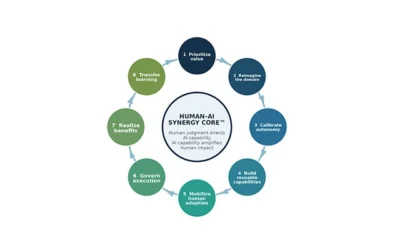
Move Beyond Isolated AI Pilots: Start Transforming Business Domains
How the CMC Domain Transformation Flywheel Turns Human Judgment and AI Capability into Cumulative Business Value The unit of AI transformation should not be the isolated use case. It should be the business domain: an end-to-end system integrating...
The Economics of Agentic AI Where Automation Ends and Autonomy Begins
Where Automation Ends and Autonomy Begins How leaders can determine the economically justified level of autonomy for each business workflow EXECUTIVE SUMMARY The central executive question is no longer whether artificial intelligence can automate work. It...
© 2024 CMC Consulting. All rights reserved.
Matérias Relacionadas
Move Beyond Isolated AI Pilots: Start Transforming Business Domains
How the CMC Domain Transformation Flywheel Turns Human Judgment and AI Capability into Cumulative Business Value The unit of AI transformation should not be the isolated use case. It should be the business domain: an end-to-end system integrating...
The Economics of Agentic AI Where Automation Ends and Autonomy Begins
Where Automation Ends and Autonomy Begins How leaders can determine the economically justified level of autonomy for each business workflow EXECUTIVE SUMMARY The central executive question is no longer whether artificial intelligence can automate work. It...

Before You Decide What to Transform, Ask a Different Question
Organizations rarely suffer from a shortage of transformation initiatives. But each can lead leadership teams to begin the conversation one question too late. WHAT MUST THE ORGANIZATION BECOME CAPABLE OF DOING DIFFERENTLY AFTERWARD? Estimated reading time:...
